10-44:
Connection Received
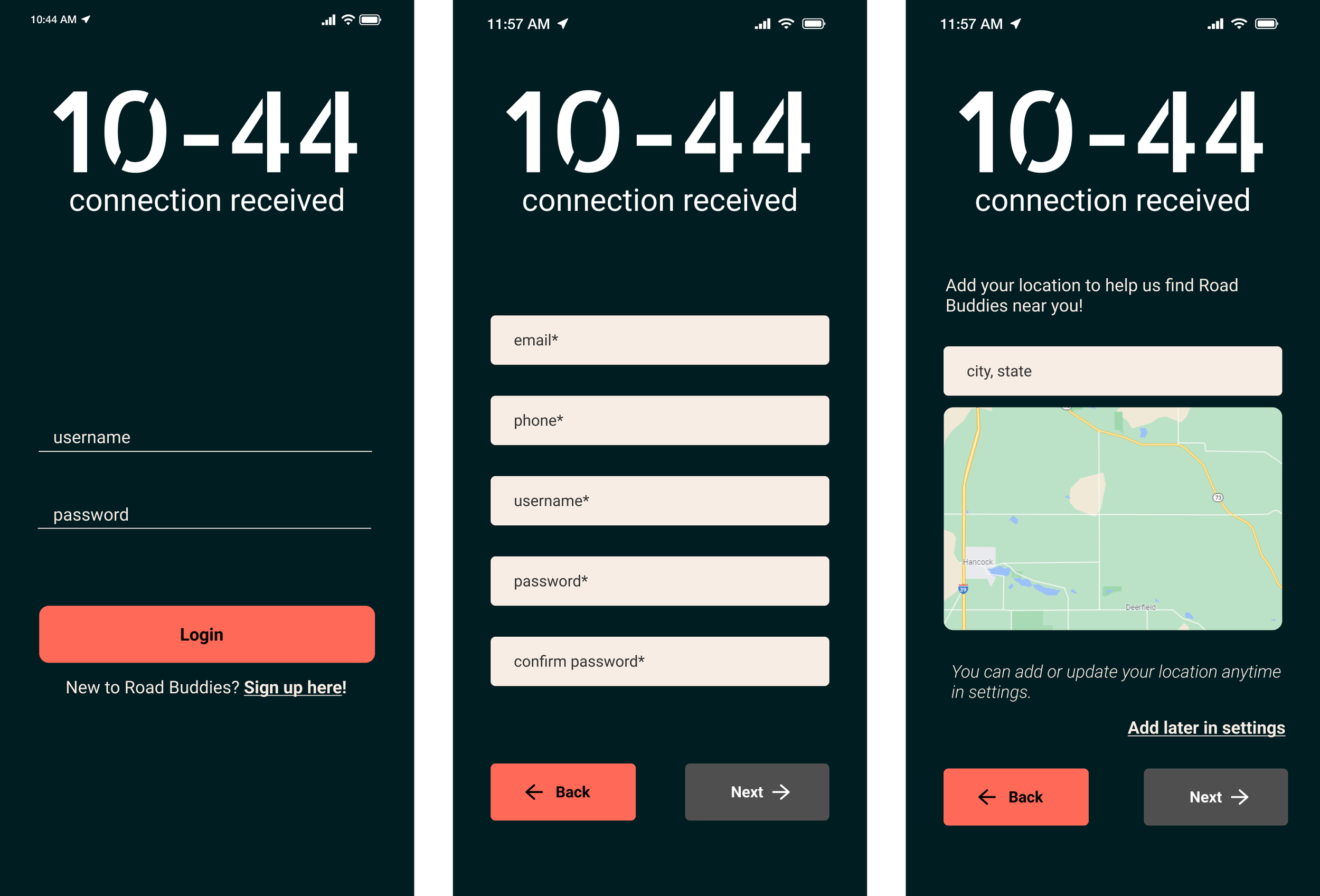
project
challenge: create an app that helps long-haul truck drivers combat loneliness during the busy holiday season
scope: 72 hours, c/c analysis, user interviews, lo- and mid-fi wireframes, clickable prototype, functional app, presentation
ux team: Jessica Ritter, Lillie Frankowski, Karen Gamber, Anthony Toledo
software team: Kenny Jean, Nick Arredondo, J.D. Watt, Brian Pham
General Assembly
West Coast Hackathon
(1st place)
problem
Long-haul delivery drivers spend long hours alone on the road, particularly during the holiday season. Statistically,
27.9% of long-haul truck drivers struggle with loneliness
26.9% of long-haul truck drivers suffer from some sort of depression
solution
Creating an online space where delivery workers can meet each other based on shared interests could:
combat loneliness via messaging and voice chat (when safe)
promote a sense of community among delivery workers
user interview
Our user interview with a long-haul delivery driver gave our team the following insight about user needs, wants, and pain points.
user needs:
to drive safely from point A to point B
ask other drivers for help if needed
info about current COVID restrictions and business closures
user wants:
talk to people on the phone (safely) while driving
share info about road hazards/conditions, places to shower and eat good food
meet someone at an event and become friends
talk about hobbies, podcasts, movies, etc.
pain points:
spends many hour alone
difficulty multitasking while focusing on the road
trouble finding places to park overnight, good places to shower and eat, and restrooms
competitive/comparative
analysis
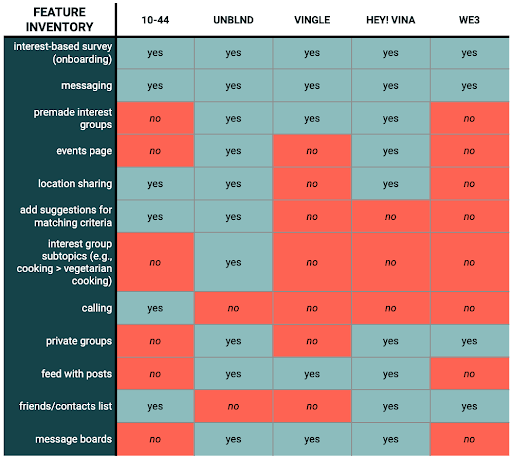
After researching similar apps that match users based on a set of selected interests, we created a feature inventory that helped us see what 10-44 offers in comparison to its competitors.
The inventory helped inform our minimum viable product, which helped the team:
define what 10-44 offers and does not
create a list of must-have functionality and stretch goals
work swiftly under a 72-hour deadline
user testing
Our asynchronous user test revealed that users were able to complete each task with relative ease—8 users completed each task, and 2 users bounced.
Users were asked to complete the following tasks:
log in
select interests
send a friend request
open a message thread
navigate to settings to edit profile
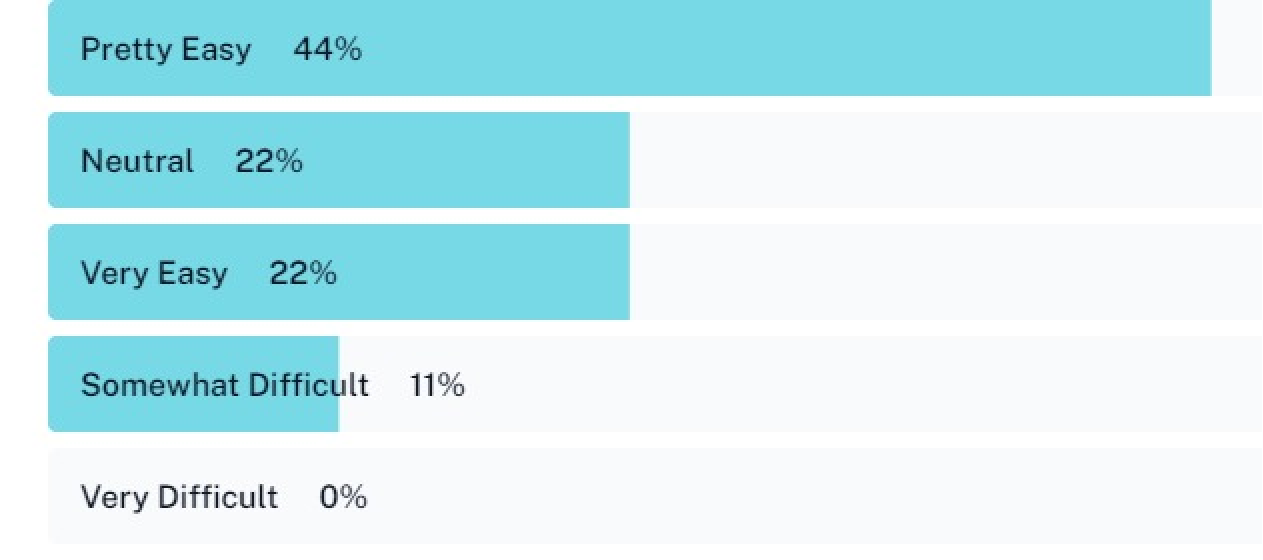
The graph shows that 6 out of 10 participants rated their experience navigating the app as either very easy or pretty easy.
A few participants shared that they were confused in some instances regarding where to click:
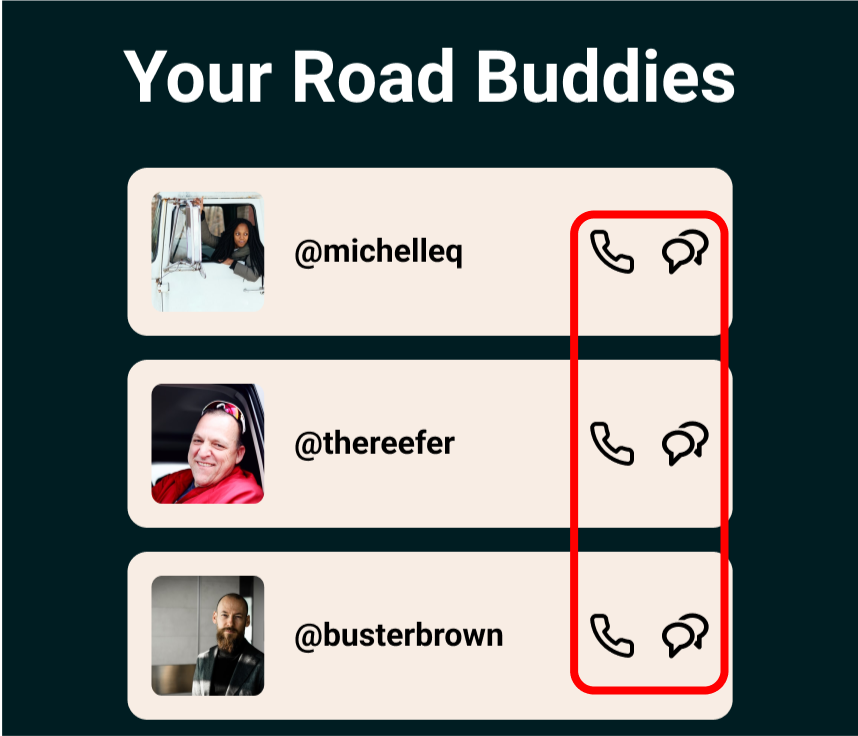
“When clicking on the message thread, I expected it to open without having to click on the message icon (too small click target area here)”
“It’s confusing to know when you’re supposed to be able to click something in the app”
Larger, more apparent buttons would benefit the user—something to address in future iterations. How close the message and call icons are could cause frustration on mobile devices.
reflection
collaboration
This project was a great opportunity to tailor my role according to what’s best for the team. In this case, a big part of my contribution was helping things move quickly. Given our 72-hour time crunch, I particularly enjoyed helping the team move quickly by:
sharing my Figma expertise with the team (auto layout, interactive components, etc.)
creating a design system of components that could be iterated rapidly
preparing and handing off design assets via Zeplin for developers
asynchronous user testing
Asynchronous tests certainly have their limitations, but I could see them being useful for testing smaller, more specific aspects of a design (rather than for general usability).
Participants complete them on their own time, making it easy to collect a large number of responses quickly. This could be useful for, say, testing one version of landing page copy versus another.